Silver Dollar Mint Marks: Locations, Dates, and Variety Clues
Identify visible silver dollar mint marks with practical photo checks, comparison steps, and cautions so you can narrow options before deeper research.
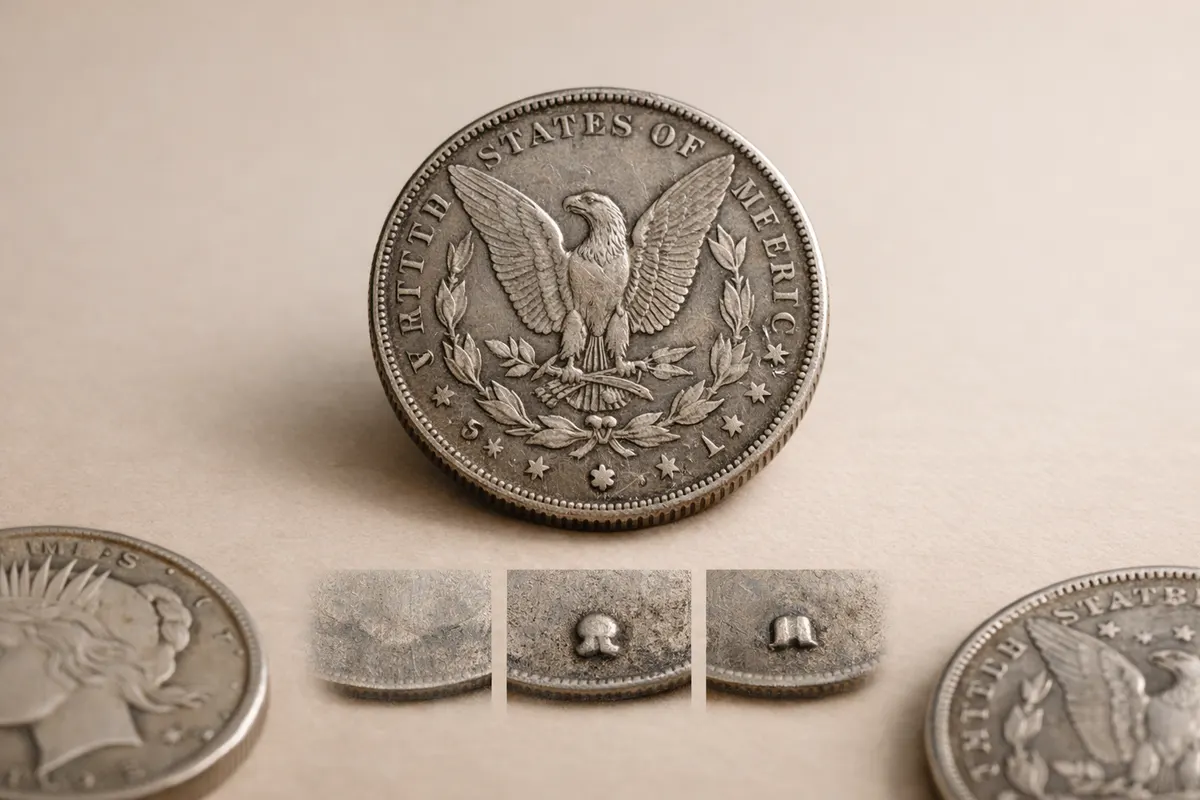
Quick answer for silver dollar mint marks
Silver dollar mint marks are small letters or letter pairs on a coin that indicate the mint facility that struck the piece. For U. S. silver dollars you’ll commonly see marks like CC, O, S, D, or no mark at all; these codes point toward Carson City, New Orleans, San Francisco, Denver, and historically Philadelphia (often unmarked) respectively. A mint mark alone narrows possibilities but rarely proves rarity or precise attribution by itself.
The strongest immediate clues you can get from a photo are the presence and exact shape of the mint mark, the mark’s placement relative to nearby design elements, and the coin’s date and overall style. Combining those visible clues with known production patterns for a series (for example, Morgan versus Peace dollars) will usually identify plausible mint locations and date ranges.
Expect limits: a single photo, glare, heavy wear, or cleaning can hide or alter a mint mark. Some coins have re-punched mint marks, filled or cleaned letters, or counterfeit marks added to change perceived value. Treat a mint-mark read from one image as a working hypothesis, not final proof.
If you want a quick triage: check where the mark sits (reverse vs. obverse for the series), photograph the area with raking light and a macro setting, and compare the mark’s exact letter shapes to reference images. Use a tool like Coin Identifier - Coinora after you gather these photos to help locate similar documented images and variety notes, and keep any uncertain reads as research notes rather than conclusions.
Strongest visual clues
Start with the mint mark itself: the exact letters, their size, and serifs. A genuine mint mark will match the expected font weight and stroke ends for its series. For example, the spacing and serif style of a Carson City 'CC' is different from later double-letter or re-punched strikes. Even on worn coins, the basic outline of each letter can survive enough to separate major mint possibilities.
Placement relative to the design is durable information. Many silver dollars place the mint mark in a consistent spot: Morgan reverse marks are typically under the wreath, while Peace dollars place their mark near the eagle on the reverse. If the mark’s position is off by several millimeters compared with standard references, that can indicate an altered or counterfeit mark.
Date style and digit shapes are another strong clue to combine with a mint mark. Differences in how numerals are struck — short vs. long serifs on the 7, the loop of the 2, or the flatness of a 0 — often align with specific years and die families. A mint mark that fits the expected date-style package strengthens a match far more than the mint mark alone.
Surface detail around the mark helps: original mint marks have consistent patina, wear patterns, and surface flow. A mint mark that looks cleaner, scratched, or recessed relative to surrounding metal can be a later alteration. Under magnification, look for tool marks or fill material that betray tampering.
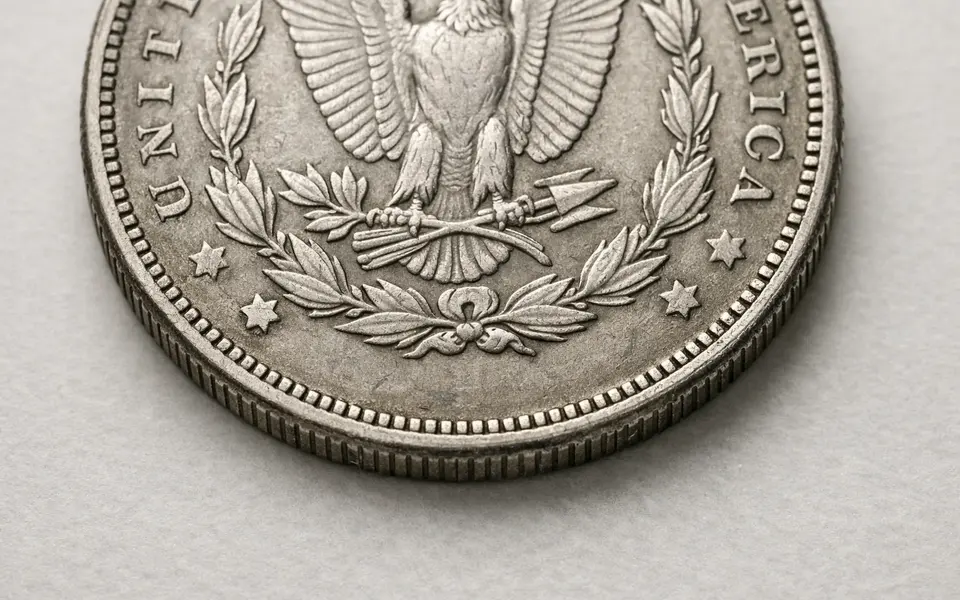
- Exact letter shapes and serifs — often visible even with moderate wear
- Consistent placement relative to design elements (reverse vs. obverse, below wreath, beside eagle)
- Date-digit shapes and spacing that pair logically with the mint mark
- Surface texture and patina continuity around the mark
Weak signals
Color and toning are tempting to use but are weak signals for mint location. Tones vary with environment, storage, and cleaning; two coins struck at different mints can show identical toning after decades in similar conditions. Don’t equate dark or colorful toning with a particular mint without supporting marks or die features.
Single-angle photos mislead. A mint mark may appear missing if photographed at a flat angle or with direct flash that washes recesses. Likewise, glare can create false letter shapes. Rely on multiple angles and raking light to confirm a suspected mark before treating it as evidence.
General design resemblance is often a weak signal when used alone. Many series share standard dies or closely related die pairs. A coin that looks like a known variety in overall design might still be from a different mint if the mint mark or die diagnostics differ. Avoid concluding identity from overall appearance without specific mark and date checks.
Surface alterations are easy to miss in low-resolution images. Filled mint marks, re-punching, or light tooling can mimic authentic marks. If the area around a suspected mint mark looks inconsistent — unusually smooth, pitted, or scarred — treat that as a red flag requiring closer, preferably hands-on, inspection.
- Toning or color alone cannot identify a mint
- One photo or a single viewing angle is unreliable
- Broad design similarity doesn’t substitute for die-specific checks
- Small tooling marks or fillings can create false positives
Comparison workflow
Collect controlled photos: full obverse and reverse, a tight crop of the mint mark, and a macro of the date. Use raking light (light at a low angle) to reveal recessed details, and include a scale reference like a ruler or coin edge in at least one shot. Keep file names or notes that connect each photo to the coin orientation and lighting used.
Make a short checklist for each candidate mint: mint mark letter shape, exact placement, date-digit style, and any die markers such as die cracks, cud marks, or repunched letters. Compare your coin’s checklist to a trusted reference image or a documented example. A match on three or four checklist items gives a reasonable working identification; a match only on the mint mark is weak.
When you find small mismatches — for example, the letter serif is slightly different or the mint mark sits a millimeter too high — don’t discard the comparison immediately. Consider known die varieties and re-punched mint marks; consult variety guides or die-atlas photos to see if the discrepancy is a recognized subtype before assuming fraud.
Record uncertainty explicitly. Make notes like “mint mark likely S; date digits match S-1923 dies; mint mark edges appear filed. ” Treat those notes as a research trail. If the coin potentially has collectible value or unusual features, use those notes to prepare photos and questions for a specialist review or certified grading service rather than relying on a single unverified read.
- Take multiple controlled photos (overview, mint mark, date, edge)
- Compare checklist items: mark shape, placement, date style, die markers
- Check variety guides for re-punched or shifted marks before assuming alteration
- Log uncertainty and prepare for specialist review when needed
App workflow
After you gather the photos and checklist notes, use the app as a focused research pass. Open Coin Identifier - Coinora on your device and submit the best-lit images to the app’s identification flow; treat the app’s suggestions as leads to follow, not final verification. The app can surface visually similar documented examples, known die varieties, and common lookalike warnings to speed your comparison work.
Use the app results to refine your checklist. If the app highlights a close match from a specific mint and year, return to your coin and look for the app’s cited diagnostic — a tiny die crack, a distinctive numeral shape, or the mark’s exact serif — and capture an additional macro if needed. That back-and-forth is how a tentative match becomes a confident research conclusion.
Keep in mind the app won’t replace hands-on inspection for problematic coins. If the app flags potential tampering, an altered mint mark, or an unexpectedly valuable variety, follow up with a numismatic reference book, auction records, or a professional grader before taking further action. The app is most useful as a fast filter that points you to likely matches and known pitfalls.
Store app findings as research notes: save the comparison images the app returns and annotate them with your observations. If you later consult a dealer or service, these notes and images help convey what you already checked and why you think a particular mint or variety is likely. That makes any subsequent verification step faster and more reliable.
- Use the app to surface visually similar documented examples and variety notes
- Refine your photo checklist with app-identified diagnostics
- Treat app suggestions as research leads, not final proof
- Save app findings and annotations to support later specialist review
Related guides
Use Coin Identifier - Coinora after checking visible clues
After you photograph mint marks and run the checklist above, try Coin Identifier - Coinora on iOS to surface visually similar examples and variety notes. Treat app suggestions as research leads: confirm any surprising or high-value reads with authoritative references or a professional before acting.

Frequently asked questions
Where are mint marks usually located on silver dollars?
Location depends on the series: many Morgan dollars have the mint mark on the reverse under the wreath, while Peace dollars commonly place it on the reverse near the eagle. Exact placement can vary by year and die; always photograph the whole reverse and a tight crop of the mark area.
Can a mint mark alone prove a coin's origin or value?
No. A mint mark is a strong narrowing clue but not definitive proof. You need to combine it with date style, die markers, surface characteristics, and provenance. Altered or added mint marks exist, so treat a mark read from one photo as a working hypothesis until confirmed by multiple diagnostics or a specialist.
How should I photograph a mint mark to make identification easier?
Use multiple shots: full obverse and reverse, a close-up of the mint mark area, and a macro of the date. Use raking light to show recesses and a diffuse secondary light to reduce glare. A steady mount or phone macro lens helps; include a scale reference in at least one photo.
What are common lookalikes or tampering signs to watch for?
Watch for marks that look unusually clean, filled, or recessed compared to the surrounding surface, inconsistent toning around the letters, or tiny tooling marks. Re-punched mint marks can create doubled strokes that mimic variety markers; conversely, added marks may have different strike depth or edge texture. When in doubt, collect more photos and consult reference images or a specialist.